|


County Galway (Irish: Gaillimh, is on the West coast of Ireland, in the province of Connacht. It is home to one of the larger freshwater lakes, Lough Corrib which at one time was famous for salmon fishing. West Ireland has scenery like that out of a fairy tale. Its mountains are a deep and rich color of green and when the clouds roll in it seems almost magical from the Connemara region and along the shores of Galway Bay and out in the Aran Islands. To top it off, there is also the urban landscape of Galway City, the west coast's largest city. It is the fourth most populous city in the state and the sixth most populous on the island of Ireland. The Irish name for this county, Gaillimh, derives from Gaill, the Gaelic word for outsiders or foreigners. It is ironic, then, that this county is now home to the largest gaeltacht, where the language and culture of Ireland still survives. Gaeltacht is the Irish language word meaning an Irish-speaking region. Nearly 10% of the population in Galway city are Irish speakers. Galway city has a reputation amongst Irish cities for being associated with the Irish language, music, song and dancing traditions. It is sometimes referred to as the 'Bilingual Capital of Ireland', although like all other cities in the Republic of Ireland, the vast bulk of the city's inhabitants converse mostly in English. The city is well known for its "Irishness", mainly because it has on its doorstep the Galway Gaeltacht. The National University of Ireland, Galway founded in 1845 as Queen's College also holds the archive of spoken material for the Celtic languages. The current President, Prime Minister, Deputy Prime Minister and Attorney General of Ireland are all past pupils. The actor Martin Sheen has also attended. The current President of Ireland, Michael D Higgins, was TD ( Teachta Dála is a member of the lower house of the Irish Parliament (Oireachtas)) for the Galway West parliamentary constituency, of which Galway City is a part, from 1981 to 1982 and from 1987 to 2011.
County Galway is known as the 'stone wall County', due to the predominant use of stone walls as boundary markers throughout the county. This use of stone is probably due to the abundance of limestone to be found within the region. The landscape in County Galway is varied. Connemara is the peninsula of Western Galway. It has long been regarded as one of the most beautiful places in the world. Its barren windswept landscape is compelling and inspiring. The blanket bog peatlands covering the region houses some beautiful and varied flora, and provides a contrast to the more green and fertile land of the midlands and the south. The ancient mountains have been raked to their bones by long thawed glaciers, leaving patches of grey granite and jutting outwards, and potato rows still visible from the desperate times of the Great Famine (1845–1852). The fields are divided by hand-made stone walls, often collapsed. The Atlantic coast is dramatic and powerful, filling one with appreciation for the fear that the Irish men and women from this region must have felt when preparing for the trip across it. Offshore, lashed by the unforgiving Atlantic, the rocky Aran Islands and Inishbofin are anchored by enduring traditions: pony traps, hand-knitted fishermen’s sweaters, and age-old legends and lore. Scrubbed clean by the elements, relics on the islands include ancient cliff-top ringforts and rusted shipwrecks that serve as a reminder of the perilous seas.
The county's principal town Galway City, situated by the sea, is a vibrant place, a hub of activity, always filled with entertaining street-life and many things to see and do. The 'City of Tribes' - is steeped in a rich history of trade and travelers. This history can still be appreciated in contemporary times. Galway City takes its name from the river Gaillimh (River Corrib) that formed the western boundary of the earliest settlement, which was called Dún Bhun na Gaillimhe ("Fort at the mouth of the Gaillimh") was constructed in 1124, by the King of Connacht, Tairrdelbach Ua Conchobair (1088–1156). Eventually, a small settlement grew up around this fort. During the Norman invasion of Connacht in the 1230s, Galway fort was captured by Richard Mor de Burgh, who had led the invasion. The word Gaillimh means "stoney" as in "stoney river" .The city also bears the nickname "City of the Tribes" (Irish: Cathair na dTreabh). During the Middle Ages, Galway was ruled by an oligarchy of fourteen merchant families (12 of Norman origin and 2 of Irish origin). These were the "tribes" of Galway. The city thrived on international trade, and in the Middle Ages, it was the principal Irish port for trade with Spain and France. The most famous reminder of those days is ceann an bhalla ("the head of the wall"), now known as the Spanish Arch, in the southwest of the city, was built in the 1580s as an extension to the city walls. In 1477 Christopher Columbus visited Galway, possibly stopping off on a voyage to Iceland or the Faroe Islands. In front of the Spanish Arch is a monument to Christopher Columbus. It was presented to Galway by the city of Genoa in 1992 to commemorate both the 500th anniversary of the voyage to the New World and the visit of Columbus to Galway in 1477.
Galway is known as Ireland's Cultural Heart (Croí Cultúrtha na hÉireann) and is renowned for its vibrant lifestyle and numerous festivals, celebrations and events. As in most Irish cities traditional music is popular and is kept alive in pubs and by street performers. Many sporting, music, arts and other events take place in the city. The largest of these annual events include the Galway Arts Festival, the Galway Races, and the Galway International Oyster Festival. The Galway Arts Festival (Féile Ealaíon na Gaillimhe) takes place in July. The festival features parades, street performances and plays, musical concerts and comedy acts. Inaugurated in 1954, the Galway International Oyster Festival is a food festival held annually in Galway during September, the first month of the oyster season. The main events are two Oyster Opening Championships, the Guinness Irish Oyster Opening Championship and the Guinness World Oyster Opening Championship. Other events include a beauty pageant to select the Oyster Pearl, and a 'Mardi-Gras' Party. Galway City boasts a diversity of culture and cosmopolitan atmosphere usually only to be found in larger cities. South of Galway city there are medieval churches and castles, Norman towers and oyster beds in abundance, and eastwards of the city farming fields roll seamlessly to the country’s bucolic midlands.
Irish Surnames associated with County Galway include:
Athy, Bermingham, Blake, Bodkin, Brehan, Browne, Burke, Codyre, Conealy or Conneely , Connolly, Connor, Corrib, Darcy, Deane, DeBurgo, Dillon, Donnellan, Doyle, Duffy, Dunmore, Egan, Eyre, Fahy, fFrench, Flaherty, Forde, Gately, Gillespie, Grimes, Flaherty, French, Hall, Hannon, Heyne, Higgins, Hughes, Jennings, Joyce, Keane, Keegan, Kelly, Kenny, King, Kitt, Knockton, Lavelle, Loftus, Lynch, Lyons, MacConneely, MacConrey, MacCook, MacDavie, MacDermott, McDonagh, MacDonnell, MacEgan, MacGilduff, MacGillkelly, MacHenry, MacHugh, MacKilduff, MacKilkelly, MacKowge, MacNevin, MacRedmond, MacTully, MacWard, Madden, Madigan, Mahon, Mannion, Martin, Morris, Mullin, Murphy, Nevin, Nevins, O'Cashin, O'Cahill, O'Callanan, O'Canavan, O'Cane, O'Cashin, O'Cawley, O'Cleary, O'Coffey, O'Concannon, O'Connellan, O'Connelly, O'Connor, O'Coogan, O'Cullen, O'Cunnegan, O'Curran, O'Dally, O'Daly, O'Devaney, O'Donaghey, O'Donnell, O'Donnellan, O'Doorly, O'Downey, O'Doyle, O'Dreenan, O'Duane, O'Dugan, O'Fahy, O'Fallon, O'Feeney, O'Flaherty, O'Foran, O'Grady, O'Hall, O'Halloran, O'Hanrahan, O'Haverty, O'Hayes, O'Heyne, O'Hoolighan, O'Horan, O'Keaveney, O'Kelly, O'Kenny, O'Kerwan, O'Larkin, O'Lee, O'Leehan, O'Lornan, O'Lyne, O'Madden, O'Maginn, O'Mannin, O'Meehan, O'Mohan, O'Moran, O'Mulkerrin, O'Mullally, O'Mullan, O'Mullarky, O'Mulrooney, O'Naughton, O'Ruane, O'Scanlan, O'Scurry, O'Sheehan, O'Shaughnessy, O'Sullivan, O'Toole, O'Tormey, O'Tracey, O'Tuohy, Rickard, Skerret, Stanton, Staunton, Walsh, Ward.
|
*****************************
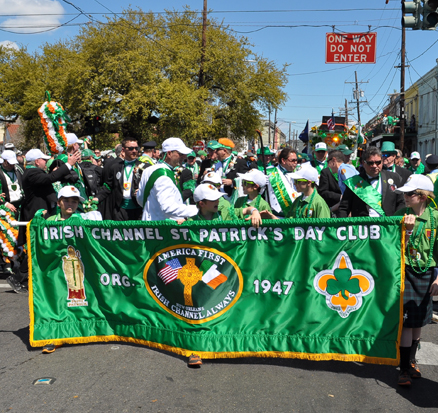
Looking for two young men to help carry our banner during this year’s parade. If you know of any boys between the ages of 9-12 that might be interested, please contact a board member or send an email to Kelly Burke @ krburke@cox.net
*****************************

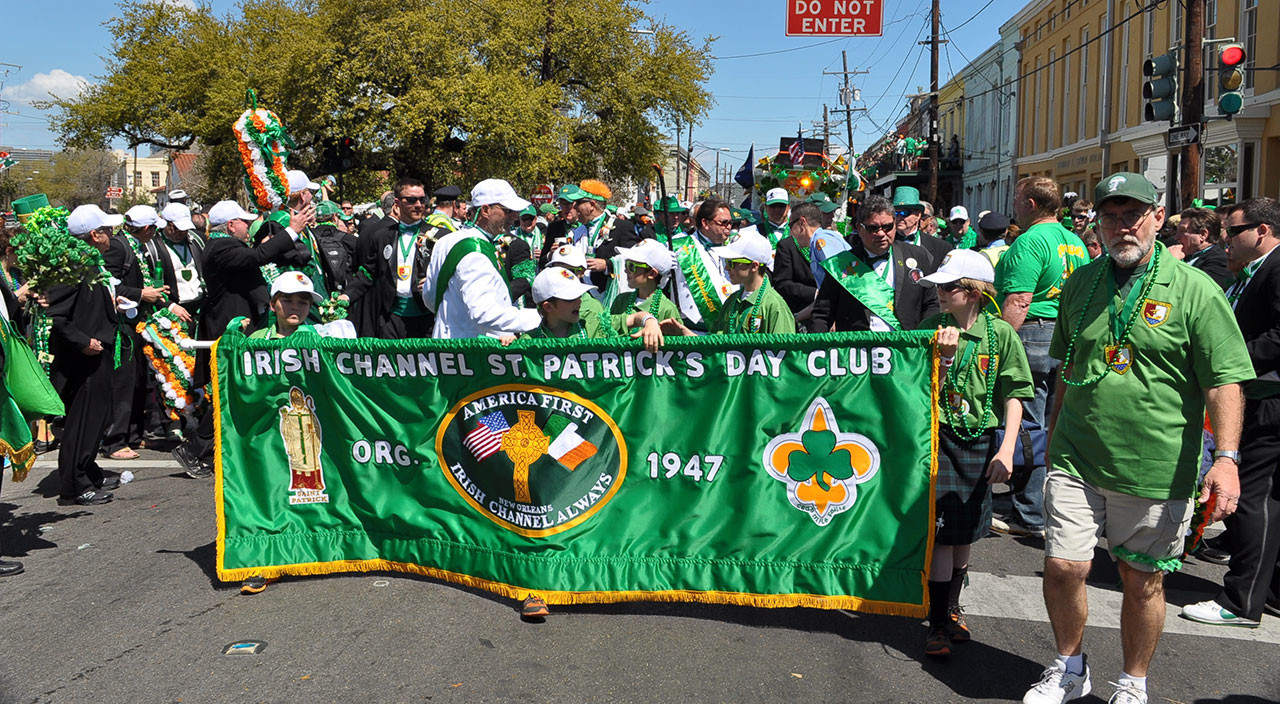
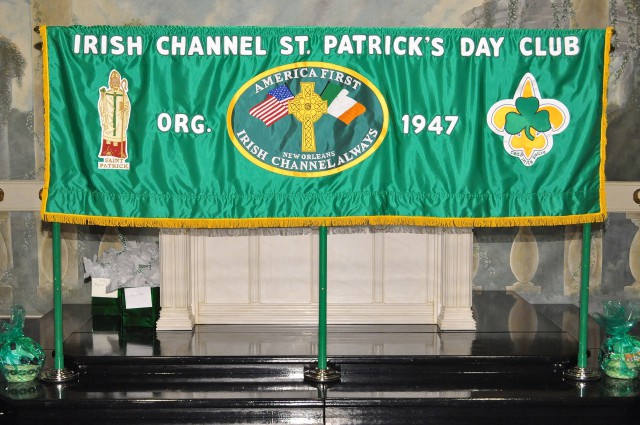
The Irish Channel St. Patrick's Day Club will hold its 66th Annual Mass and Parade celebration on Saturday, March 16th, 2013, 12:00 p.m. at St. Mary's Assumption Church (corner of Constance and Josephine Streets) followed by the parade (corner of Felicity and Magazine) at 1:00 p.m. The Practice March is Friday, March 8, 2013 and the benefit block party will take place on Thursday, March 14, 2013 from 10:00 a.m. to 6:00 p.m., at the Annunciation Square Playground, directly in front of St. Michael's Special School; to whom the proceeds of the block will be donated.
The Irish Channel St. Patrick's Day Club's President, Dick Burke said, "We are looking forward to celebrating another year of New Orleans Irish heritage with the friends and neighbors of the Irish Channel. It is our pleasure to contribute to the selfless mission of St. Michael's."
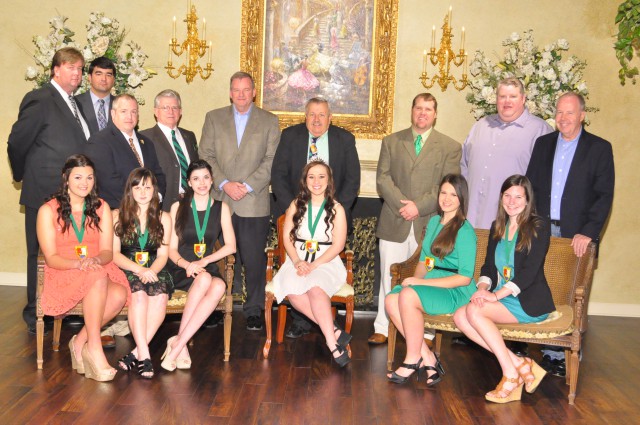
The Irish Channel St. Patrick's Day Club was organized in the Channel in 1947 and has remained in the area with its annual mass and parade for 60 years. The club's 1,400 members are ethnically diverse, all claiming strong ties to the Irish Channel neighborhood.
In recent years, the organization's activities have expanded to include Special Olympics, the Crohn's Benefit Golf Tournament for Crohn's Research, distribution of Thanksgiving baskets and active support for the Friends of St. Alphonsus Art and Cultural Center.
|